Checking Your Ethiopian University Exit Exam Result (2026): Portals, Passing Marks, & Troubleshooting
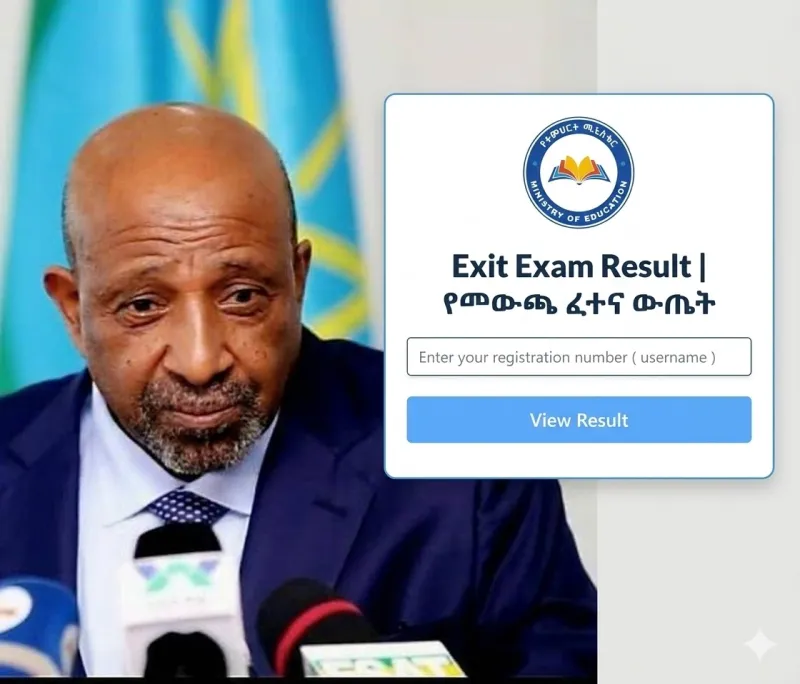
Table of Contents
Graduating from a university in Ethiopia is a monumental achievement, a culmination of years of hard work, sleepless nights, and endless assignments. However, in recent years, completing your coursework is only half the battle. To officially secure your degree and step into the professional world, you must pass the National University Exit Exam mandated by the Ministry of Education (MoE).
When the official announcement is made that the results are released, a wave of anxiety and excitement sweeps across the country. The biggest challenge graduates immediately face is, "How do I check my exit exam result quickly?" and "What do I do if the website crashes?"
In this comprehensive, step-by-step guide, we will walk you through everything you need to know about the Ethiopian exit exam results. We will cover the official portals, secret tips to bypass heavy website traffic, the grading system, and the crucial next steps whether you passed or need to retake the exam.
Why the Ethiopian University Exit Exam Matters
Before diving into how to check your score, it is essential to understand why this exam exists. The Ministry of Education introduced the exit exam to standardize the quality of higher education across all public and private universities in Ethiopia.
For job seekers, the Exit Exam Certificate has become just as important as the actual degree. Employers across the country—ranging from government institutions to private banks and multinational NGOs—now explicitly require candidates to present proof that they have passed the national exit exam. It serves as a universal benchmark, proving that a graduate possesses the fundamental knowledge and competencies required in their specific field of study.
How to Check Your Exit Exam Result: Step-by-Step
The Ministry of Education and the Educational Assessment and Examinations Service (EAES) usually provide specific online portals where students can access their scores. Here is the most reliable method to check your status:
Method 1: The Official MoE Ethernet Portal
This is the primary and most direct route to finding out your score.
-
Prepare Your Credentials: Before opening any browser, ensure you have your official Registration Number (also known as your ID number) and your exact First Name as it was registered during the exam application.
-
Open a Reliable Browser: Open Google Chrome, Safari, or Firefox on your smartphone or computer. Ensure you have a stable internet connection.
-
Enter the URL: Type the official result portal address into the search bar: result.ethernet.edu.et (Note: Always ensure you are on the official
.edu.etdomain to protect your personal data). -
Input Your Details: Once the page loads, you will see two primary blank fields. Carefully type in your Registration Number in the first box and your First Name in the second box.
-
Submit and View: Click the 'Check Result' or 'Submit' button. Your profile, department, and final score will be displayed on the screen.
Method 2: Official Telegram Bots
During the first few hours of the result announcement, the main website experiences massive traffic. To ease the load, the Ministry of Education frequently launches an official Telegram bot. If the website is slow, check the verified (blue-ticked) official Telegram channel of the Ministry of Education for a direct link to the result-checking bot. You simply start the bot, enter your registration number, and it will automatically reply with your score.
"Site Cannot Be Reached": How to Troubleshoot Server Crashes
It is an incredibly common and frustrating experience. You type in the URL, hit enter, and the screen just loads infinitely before showing a "504 Gateway Timeout" or "This site can’t be reached" error.
This happens because hundreds of thousands of students from across Ethiopia are trying to access the exact same server at the exact same second. If you encounter this, do not panic. Try these proven troubleshooting tips:
-
Try Off-Peak Hours: The highest web traffic occurs immediately after the announcement and during the day. If the site is down, wait until late at night (between 1:00 AM and 4:00 AM East African Time) or early in the morning. The server load drops significantly during these hours, and the site will load in seconds.
-
Clear Your Browser Cache: Sometimes your browser saves an error page. Go to your browser settings, clear your "Cookies and Cache," restart the browser, and try again.
-
Use Incognito/Private Mode: Open a new "Incognito" tab (Ctrl+Shift+N on Chrome) and try accessing the site. This forces the browser to load a fresh version of the page without relying on stored data.
-
Switch Your Network: If you are using mobile data, try switching to a strong Wi-Fi connection, or vice versa. Sometimes different ISPs (Internet Service Providers) route traffic differently.
Understanding the Passing Mark and Grading System
A common question among students is, "What is the minimum score required to pass?"
For the vast majority of academic disciplines—including business, engineering, social sciences, and natural sciences—the standard passing mark is set at 50%. This means you must correctly answer at least half of the total questions provided in your specific discipline's exam.
Note: Certain highly regulated fields, such as Medicine, Nursing, Pharmacy, and Law, may have specific licensing requirements and slightly different evaluation metrics governed by their respective professional associations (like the Ministry of Health or the Ministry of Justice).
What Are Your Next Steps?
If You Passed:
Congratulations! Passing this rigorous exam is a massive milestone. Your immediate next steps should be:
-
Take a screenshot or print out the digital result page for your personal records.
-
Follow up with your university's registrar office to claim your official, stamped Exit Exam Certificate alongside your Temporary Degree (Tempo) and Student Copy.
-
Update your CV immediately to include "National Exit Exam Certified" and start applying for jobs!
If You Did Not Pass:
Take a deep breath. Failing the exit exam on the first try is not the end of your career journey, and you are certainly not alone. The Ministry of Education allows students to retake the exam.
-
Register for the Re-Exam: Keep a close eye on your university's notice boards and the MoE social media pages. Re-exams are usually scheduled within six months to a year.
-
Download the Blueprints: Do not study blindly. The MoE provides "Exam Blueprints" for every department, detailing exactly which modules and topics will be covered and how many questions will come from each section.
-
Form Study Groups: Gather classmates who are also retaking the exam. Reviewing past modules and tackling model questions together significantly increases your chances of passing the second time around.
Frequently Asked Questions (FAQs)
Q: What should I do if I forgot my Registration Number?
A: If you have misplaced your ID or registration number, you must contact your university's registrar office immediately. They have a master database and can retrieve your specific identification number.
Q: My name is misspelled on the result portal. Will this affect my certificate?
A: Yes, it might. If there is a discrepancy between your official university records and the MoE portal, you should immediately file a correction request through your university before the final hardcopy certificates are printed.
Q: Can I use a screenshot of my result to apply for jobs?
A: While a printout or screenshot might be accepted for preliminary job applications or interviews to prove you passed, all HR departments will eventually require the official, authenticated certificate from your university before finalizing an employment contract.
Waiting for the Ethiopian University Exit Exam result is undoubtedly a stressful experience, but knowing exactly where to look and how to navigate technical glitches makes the process much smoother. Remember, whether you passed with flying colors or need a bit more time to prepare for the next round, this exam is just one stepping stone in your long professional journey.
Stay updated, keep your registration details safe, and best of luck in your future career endeavors!
Did you find this guide helpful? Share it with your classmates and friends who are also waiting for their results. If you have any specific questions about the portal or the re-exam process, drop a comment below!
Zehulu Educational Team
VerifiedExam Preparation Specialists & Curriculum Experts
Our content is researched, written, and fact-checked by Ethiopian educators with extensive experience in national examination preparation, curriculum alignment, and academic coaching.
MoE Curriculum Trained | 5+ Years Teaching Experience